
The Cambridge Cohort for Guitar Research is a division of the Consortium. Its principal purpose is to encourage younger and early-career scholars and players, though it is not restricted to them. In any one year, all those who applied for the Andrew Britton Fellowship and reached the judging stage (including the successful applicant) are eligible for invitation to the Cohort meeting the following year. Membership of the Cohort is at the discretion of the Board of the Consortium. The colloquia of the Cohort, to which members of the Consortium are also invited, are held online.
A very successful virtual colloquium of the Cambridge Cohort for Guitar Research took place on 2 November 2024, hosted by Consortium member Samantha Muir. Schedule of papers given at the virtual meeting of the Cambridge Cohort for Guitar Research, 2 November 2024.
Schedule of papers given at the virtual meeting of the Cambridge Cohort for Guitar Research, 4 November 2023.
Current members of the Cohort are:
Nicola Pignatiello
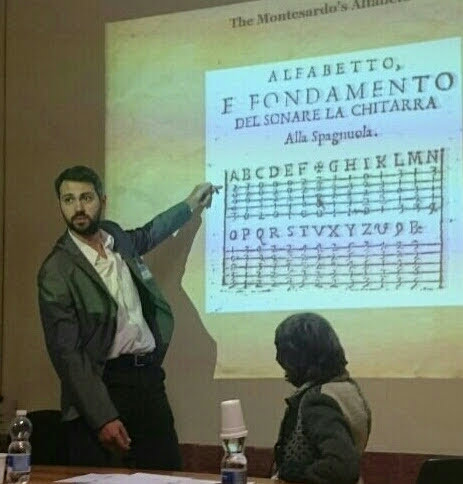
Nicola Pignatiello is a classical guitarist, lutenist and musicologist, and currently a PhD candidate in Musicology at the University of Rome “Tor Vergata”. His doctoral project aims to reconnect modern guitar training with historical models of creative musicianship, in which improvisation, diminution and patterned schemas played a central role in professional formation using neapolitan partimenti.
This research builds on a sustained activity of scholarly dissemination. Pignatiello has presented papers on Gerolamo Montesardo’s alfabeto at YMEIC (Rome, 2017), on partimenti for the guitar at the Dublin Guitar Symposium (2019), on guitar and partimenti in eighteenth-century Naples at the International Guitar Conference in Milan (2020 and 2024), and on Mauro Giuliani’s fughetta as a model for partimento realization at the Historical Performance Institute Conference, Jacobs School of Music, Indiana University Bloomington (2023). His publications include a study on Montesardo’s alfabeto in the volume Music, Individuals and Contexts: Dialectical Interaction and a modern guitar edition of Fedele Fenaroli’s Regole musicali per i principianti di cembalo, conceived as a practical tool to reintroduce partimento-based training into classical guitar teaching.
Alongside his scholarly work, Pignatiello maintains an active career as a performer on both modern guitar and historical plucked instruments. He has appeared as soloist and chamber musician in venues such as the Oratorio del Gonfalone and the Accademia d’Ungheria in Rome, as well as in the series I Concerti del Quirinale and in various European festivals. His interests range from baroque continuo practice on theorbo and lute to nineteenth-century chamber repertoire and projects that integrate historically informed improvisation into concert programming.
María José Tirado

María José Tirado is a guitarist, researcher, and educator. She currently teaches in the Guitar Department at the Andrés Segovia Professional Conservatory of Music in Linares, Spain. She is pursuing a PhD in Humanities and Arts at the University of Castile-La Mancha, where she is conducting a doctoral research project about the luthier Vicente Arias Castellanos.
She completed a Master’s Degree in Classical Guitar at the Franz Liszt University of Music in Weimar (Germany), and obtained a Bachelor’s Degree in Classical Guitar at the Higher Conservatory of Music in Córdoba, graduating with first-class honours. She also holds a Bachelor’s Degree in Music Education from the University of Córdoba, likewise awarded with first-class honours.
She has been recognised with several awards and distinctions, including the First National Prize for University Academic Achievement from the Spanish Ministry of Education (2015), and the Second Prize in the International Competition of the Córdoba Guitar Festival (2011).
Her teaching experience spans more than a decade and includes guitar teaching positions in the conservatories of Linares and Córdoba, as well as at music schools in Weimar, alongside teaching posts in primary educational institutions in Castile-La Mancha. As a performer, she has maintained a concert career since 2010, giving performances in Spain and Germany. Her work includes themed lecture-recitals on the role of women in guitar music, as well as programmes dedicated to twentieth-century guitar repertoire.
She has delivered presentations at Spanish guitar festivals on the work of the luthier Vicente Arias and on the history of the Spanish guitar, participating in events such as the Seville Guitar Festival and the Petrer International Guitar Festival, among others.
As part of her research activity, she has been responsible for the cataloguing and preservation of the manuscript collection of the ‘Andrés Segovia Foundation-Museum’ for the past seven years, and has coordinated exhibitions and presentations of historical instruments. Her research skills include the analysis and organological cataloguing of historical guitars, the study and preservation of musical manuscripts, and documentary research in national archives.
Steven Watson
Steven Watson studied History and Politics at the University of East Anglia, then pursued postgraduate studies in musicology and composition at King’s College London. He is currently a PhD student at the International Guitar Research Centre (University of Surrey), where he is researching the history of playing guitar without nails, supervised by Professor Stephen Goss. He is also conducting research into the life of the poet, writer, and guitarist John Roberts. In addition to his research, he is an active player, composer, writer, and teacher.
Peter Elliott
Peter Elliott is a Northern Irish musicologist and guitarist based in Cambridge, England. He obtained his doctorate from the University of Cambridge in 2025 with his thesis ‘Instrument of Change: The Baroque Guitar and the Emergence of Harmonic Tonality in England and France, 1626-1737’ and holds a licentiate diploma in classical guitar performance from the Royal Irish Academy of Music, Dublin. Peter has had articles published in Medium Aevum and Early Music, as well as a critical edition of the Fontanelli ‘chitarrone francese’ manuscript published by the Lute Society Music Editions. He taught guitar for two years in Lisburn, Northern Ireland and also holds music degrees from the University of Oxford and King’s College London.
Valentina Montalvo Villalba
Valentina Montalvo Villalba (Bogotá, Colombia, 1997) is a Professional in Literary Studies with emphasis in research and editorial management, and Master in Music with emphasis in guitar performance from the Pontificia Universidad Javeriana. In the field of musicology, she has carried out the research projects “Así suena el campo: una apología de la cultura popular” (2020) and “Todos los caminos conducen a Rom… A la retórica: un acercamiento a la significación en la música” (2022), where she explores the aesthetic, theoretical and social links between literature and music. She is the founder and director of the Simposio de Investigación Musical de Bogotá (Bogotá Music Research Symposium), and currently works as a proofreader, editor and teacher.
Dr Oliver Chandler
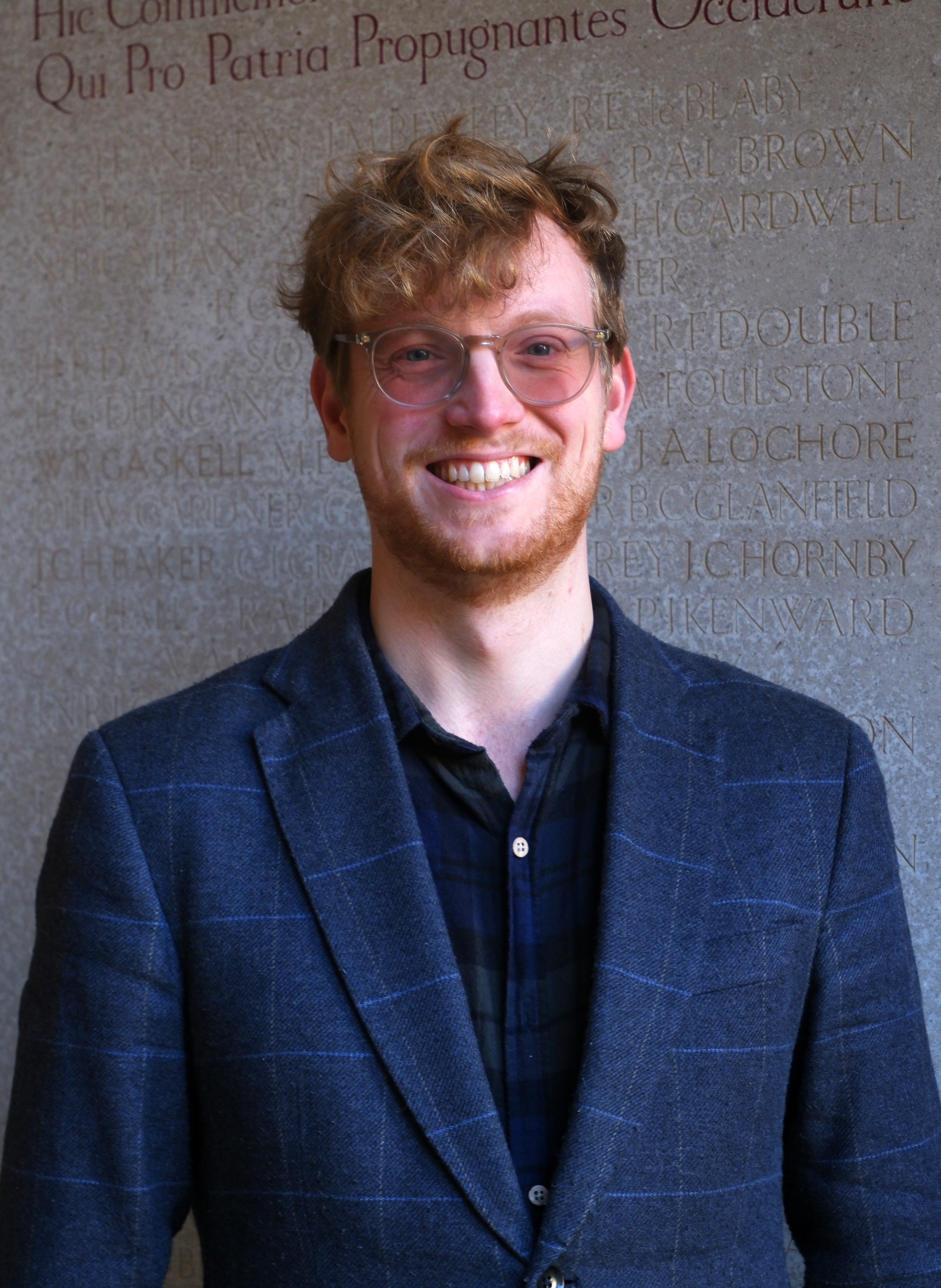
Dr Oliver Chandler is an academic professor at the Royal College of Music and director of studies in music at Hertford and Keble Colleges, University of Oxford. He is the author of A Twelve-Tone Repertory for Guitar: Julian Bream and the British Serialists, 1956-1983 (GFA 2023) and (with J. P. E. Harper-Scott) Return to Riemann: Tonal Function and Chromatic Music (Routledge 2024).
Luis Mantovani
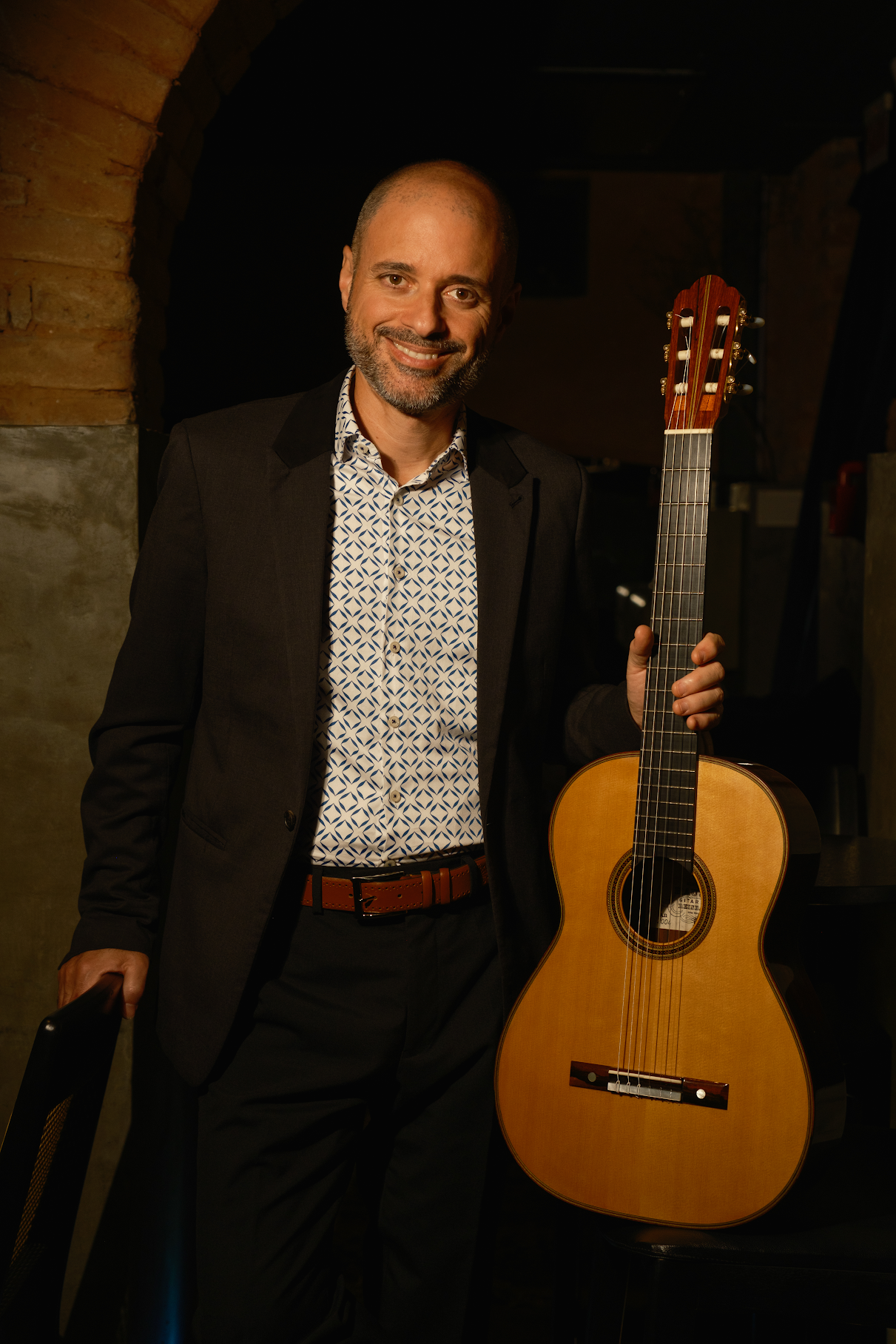
Brazilian guitarist Luiz Mantovani has built a thriving international career that successfully combines performance, teaching, and research. In 2002 he won the Pro Musicis International Award, leading to solo recitals at prestigious venues like Carnegie Hall in New York and Salle Cortot in Paris, among others. On one of these occasions, The New York Times praised his rendition of William Walton’s Five Bagatelles as “powerful, beautifully delineated and just about flawless”. A keen chamber musician, Mantovani was a member of the Brazilian Guitar Quartet for 11 years, with whom he was awarded the 2011 Latin Grammy for the album BGQ plays Villa-Lobos. His output also includes albums on the Delos (USA) and Stradivarius (Italy) labels. Luiz Mantovani holds a PhD from the Royal College of Music in London, where he investigated the chamber sonatas of Viennese composer Ferdinand Rebay. Regarded as a leading expert on Rebay, his publications include an entry in Grove Music Online and several articles in peer-reviewed journals. He recently received the Best Paper Award 2022 from Musicologica Austriaca, the journal of the Austrian Musicological Society. Mantovani was the first guitarist to receive the prestigious Artist Diploma from the New England Conservatory of Music in Boston. He also holds a Master of Music degree from NEC and a Bachelor of Music degree from the Federal University of Rio de Janeiro. His guitar mentors were David Leisner, Nicolas Barros, and Antonio Guedes. Since 2003, Luiz i has been a faculty member at the State University of Santa Catarina – UDESC, in Florianopolis, southern Brazil. In addition to university teaching, Luiz is frequently invited to conduct masterclasses and deliver lectures around the world.
Declan Hickey
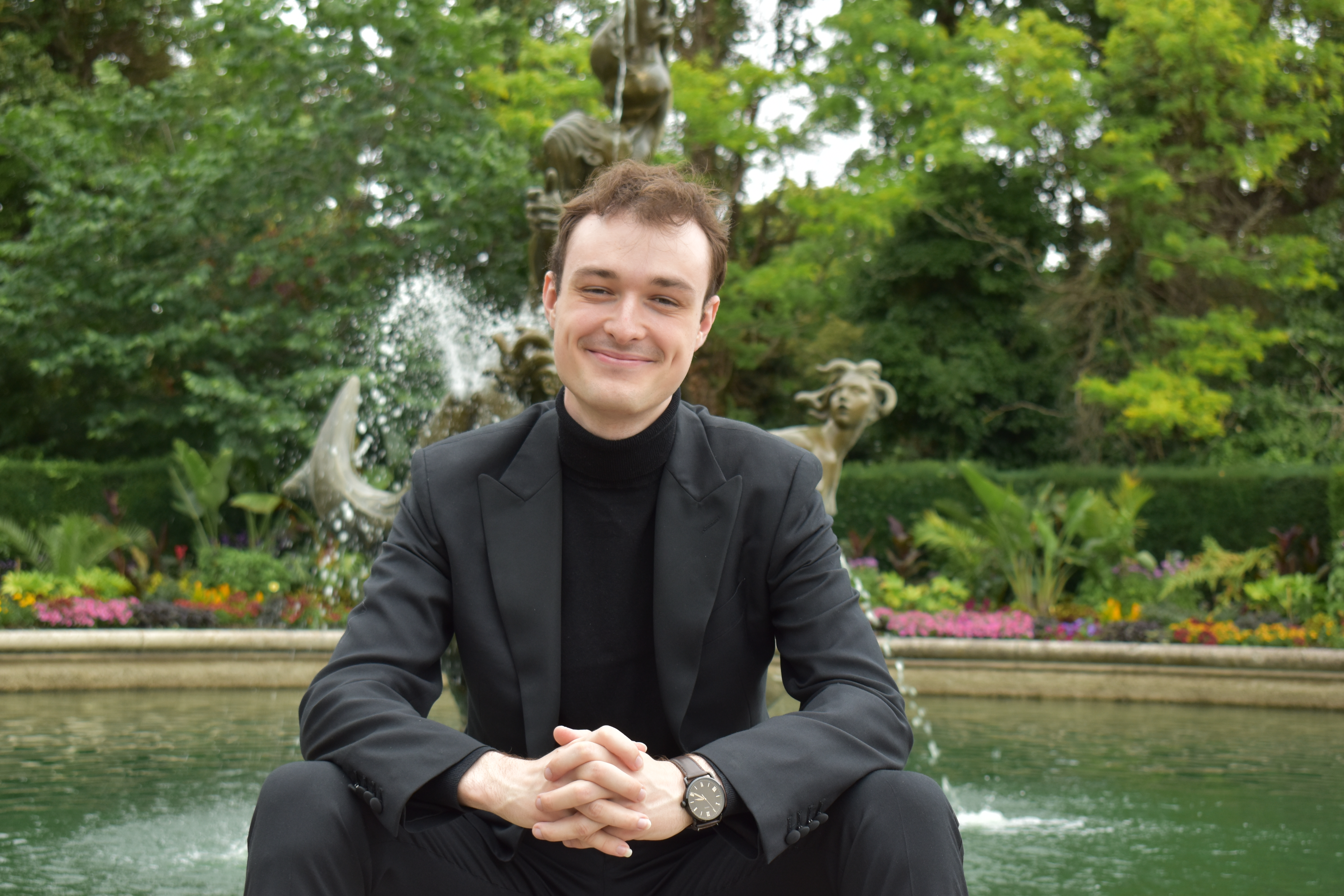
Declan Hickey is a classical guitarist, chamber musician and researcher based in London. His specialisms include British guitar music of the past century, and the guitar literature of the 19th-century periodical press. He has performed at venues including the Purcell Room, Kings Place, and St James’s, Piccadilly, and in 2023 performed Harrison Birtwistle’s The World is Discovered with the London Sinfonietta. As one half of Regency Duo, he is a Young Artist of the International Guitar Foundation for 2023–24. Devoted to new music, Declan has worked with composers including Stephen Goss and Judith Weir (Master of the King’s Music), and has premiered works by Oliver Rudland, Archie John, Declan Molloy, and Jonty Lefroy Watt. He read Music at the University of Cambridge and guitar performance at the Royal Academy of Music, where he studied under Michael Lewin and Fabio Zanon. The current focus of research is on 19th-century poet, translator and composer William Ball.
Daniel Valentin Marx

Daniel Valentin Marx studied in Munich, Cologne and Los Angeles. As winner of the Doctoral College Studentship Award 2019, he currently is pursuing a practice-based Music PhD with Prof Steve Goss at the International Guitar Research Centre, based at the University of Surrey (UK).
José Luis Segura Maldonado
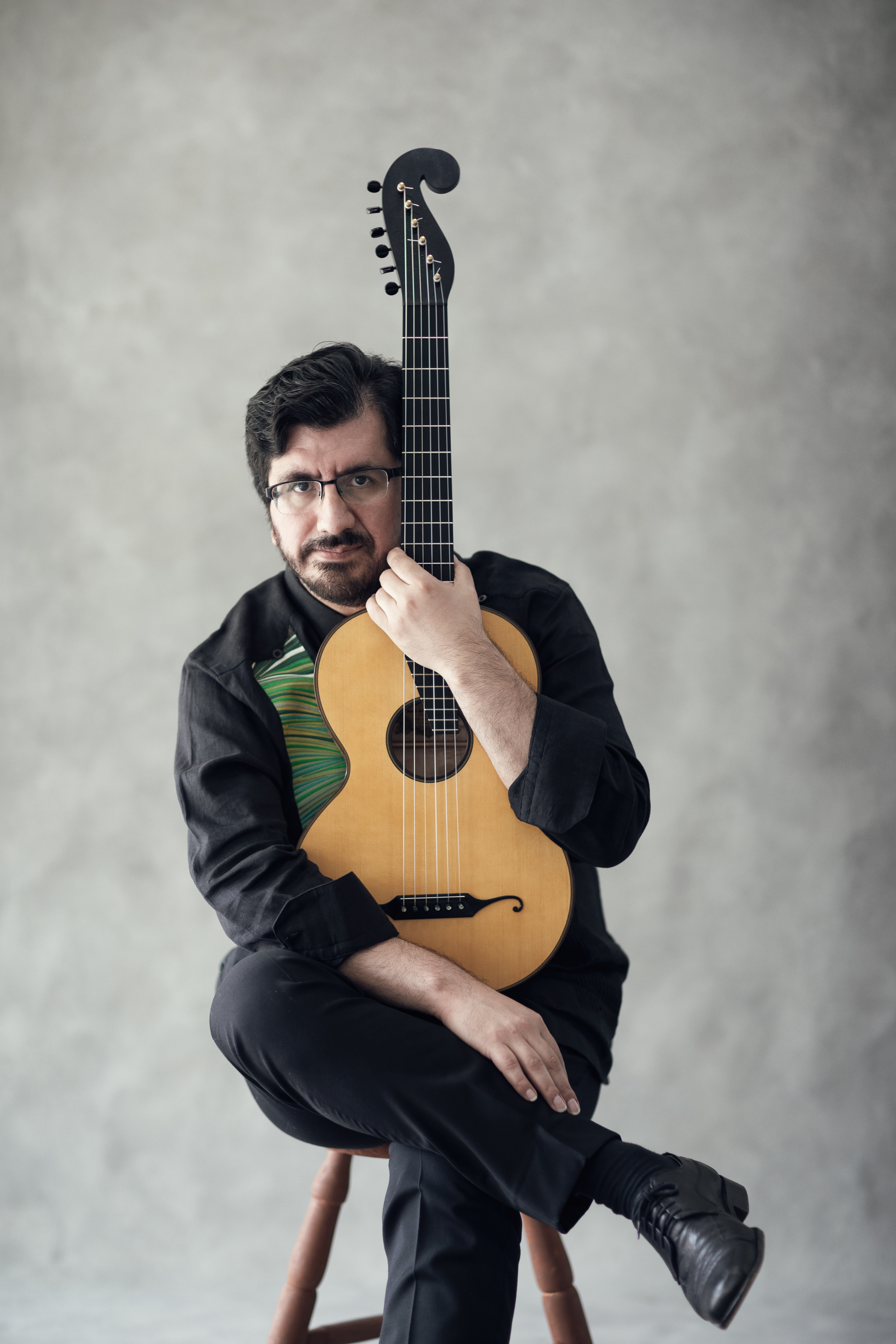
José Luis Segura Maldonado received both his bachelor’s degree in Guitar and his master’s degree in Musicology from Universidad Nacional Autónoma de México. In 2009 he studied a postgraduate course in Musicology at Real Academia de Bellas Artes de San Fernando and at Real Conservatorio Superior de Música de Madrid. He has performed in concert halls all over Mexico, as well as in several countries of North and Latin America, The Caribbean, and Europe, as a soloist, with orchestra, with Nova Musica Guitar Duo, with Cuarteto de Guitarras de la Ciudad de México, with Dúo Lux chordarum and with the Rock group Fausto. He has participated in about a dozen of recordings produced by some of the most prestigious labels in Mexico, as a soloist and with the above-mentioned ensembles; he has also performed for cultural Radio and Television broadcasts in Mexico, France Italy, and Spain. He has lectured and taught courses, masterclasses and seminars in various academic forums and universities in Mexico, as well as in Bolivia, Cuba, Peru, Spain, and United States. From 2011 to 2018 he served as Research Coordinator at Centro Nacional de Investigación, Documentación e Información Musical “Carlos Chavez” of Instituto Nacional de Bellas Artes de México. From 2018 to 2022 he served as part of the Editorial Committee at UNAM’s Music School. He has published several articles, book chapters, translations, reviews and music scores in Mexico, Cuba, Denmark, Spain, and United States. Joséi s currently conducting his doctoral studies in Musicology at UNAM with a project regarding the study, edition, and performance of the guitar music preserved at the Sutro Mexican Manuscripts in California. As well, he works as Guitar and Chamber Music professor at his university, where he is also Chairman of the Guitar Faculty and a member of its main council. From August 2025 Maldonado will be an Associate Professor at the Music School of the Universidad Nacional Autónoma de México.
Elisabeth Pfeiffer
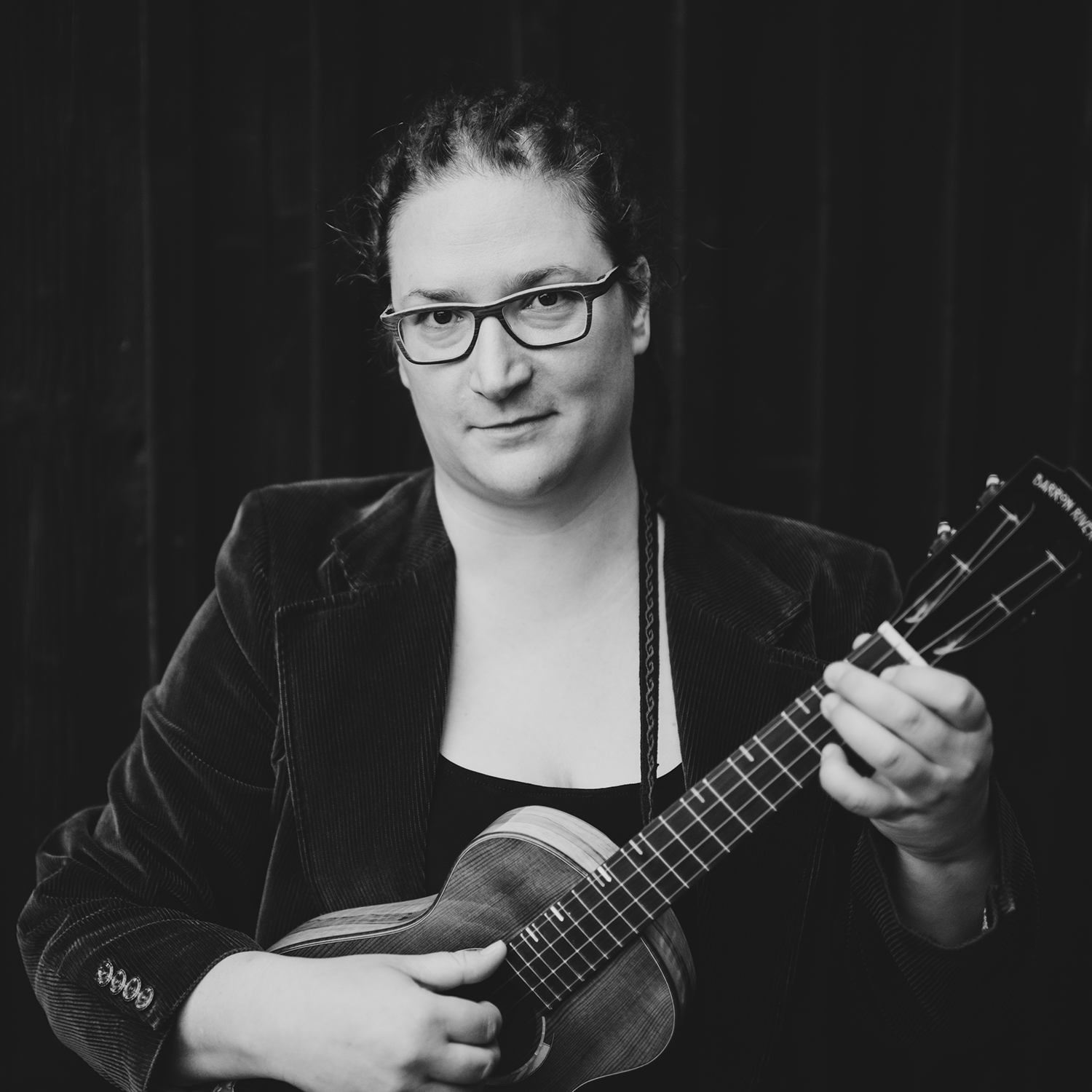
Elisabeth Pfeiffer majored in classical guitar, both at Lawrence University, Appleton, WI, USA and Hochschule für Musik, Würzburg, Germany. In 2013 she took up a ukulele and never looked back. Since, she has written three method books on strumming and picking techniques and fretting concepts. Since 2020 she has published various repertoire books for ukulele solo, including transcriptions of Renaissance guitar literature, as well as extensive collections of her own Ukulele etudes. On stage she performs solo arrangements of Pop & Rock Songs, Renaissance Music and Neue Musik. She is working to expand the solo repertoire for the ukulele with her own works and by commissioning compositions. Elisabeth is currently a PGR student at the University of Surrey.
Stephen Kenyon
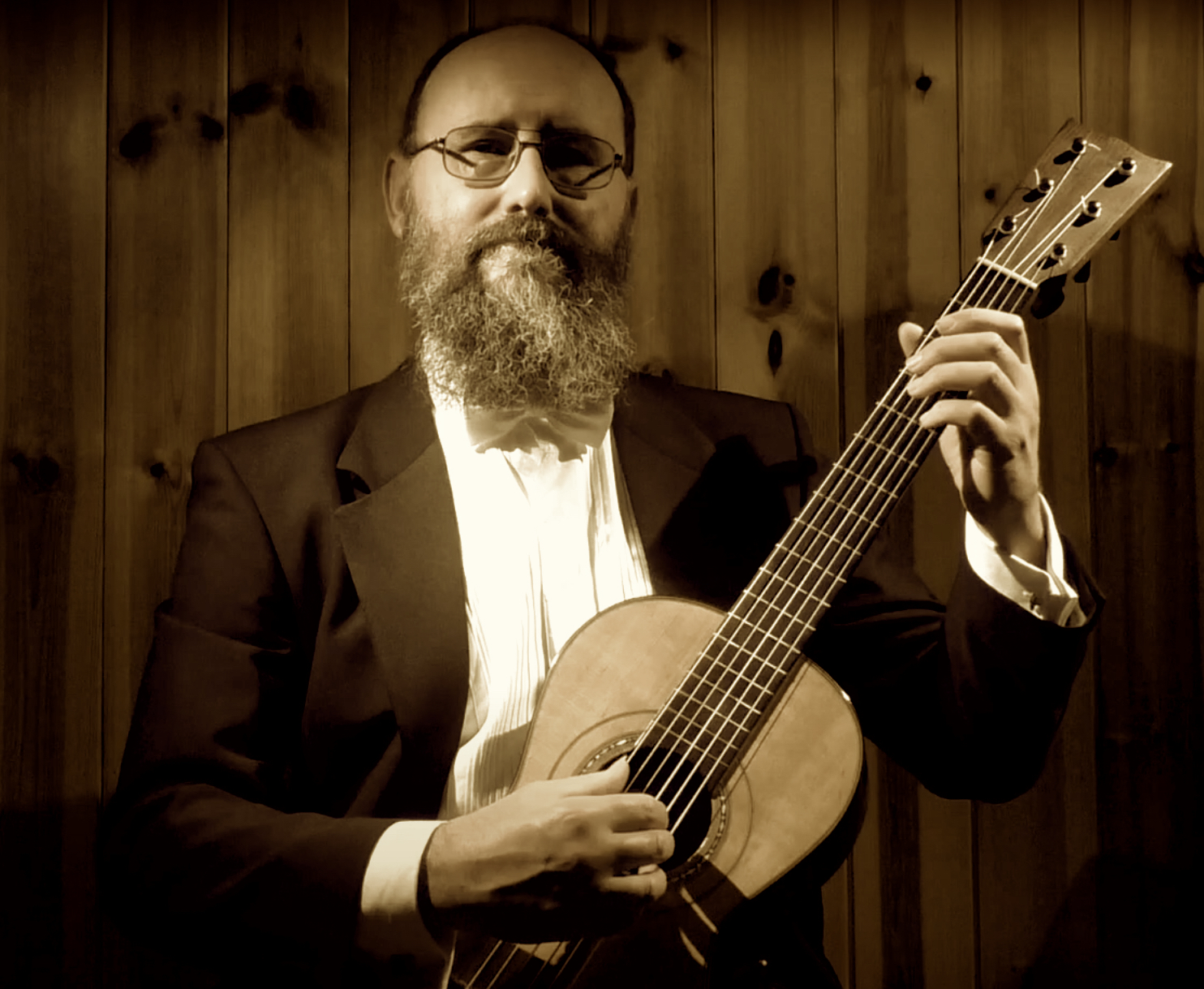
Stephen Kenyon studied guitar and composition as a post-graduate at Trinity College of Music with Gilbert Biberian. In 1993 he obtained a Staufer (as spelled on the label…) from Robert Spencer thus beginning a long interest in historical performance and enquiry. After a number of years performing in Europe and US as well as UK, he now teaches, publishes, ‘enquires’ and occasionally performs, from near the sea in Dorset.
Katalin Koltai
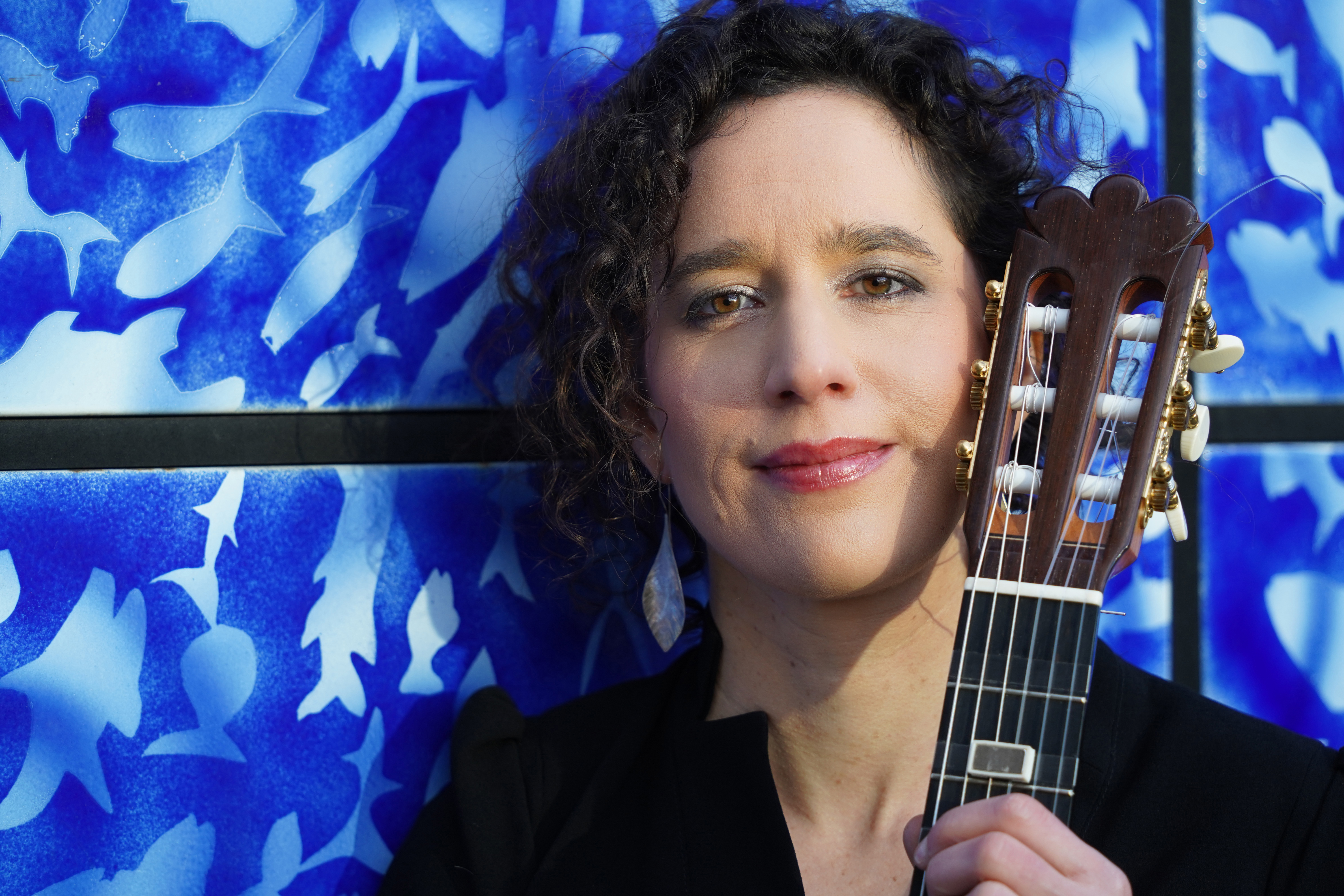
Katalin Koltai is an innovative guitarist, practice-based researcher, and the inventor of the Ligeti Guitar, expanding the horizons of guitar performance. She is currently pursuing her research as an Honorary Research Fellow at the Royal Academy of Music. Katalin completed her PhD at the International Guitar Research Centre, University of Surrey, supervised by Prof. Goss. She developed the Guitar Magnet Capo System and the Ligeti Guitar (2022), making a significant contribution to the guitar’s evolution. This invention expands the harmonic and voicing possibilities of the guitar by allowing the rapid transformation of open strings. Katalin produced an extensive number of arrangements for solo guitar and ensemble, featuring works by Bartók, Ligeti, Chopin, Saariaho, Ravel, and Kurtág. Commissioning and premiering new music, her most recent collaborations have included working with György Kurtág, David Gorton, and Gráinne Mulvey. Katalin’s work has received widespread recognition in both academia and the music industry. She has performed as a soloist at prestigious venues, including the Royal Festival Hall, Kings Place, Budapest Music Center, Kuhmo Festival, and GFA. She released recordings with various labels and published music with Doblinger Austria. Her publications have appeared in Soundboard Scholar and Bloomsbury Academic, with presentations at leading conferences. She received the American Musical Instrument Society’s Gribbon Research Award and the Royal Musical Association’s Frank Howes Grant. Since 2009, Katalin has been the guitar soloist for the Hungarian State Opera and the UMZE Ensemble. She is the artistic leader of the interdisciplinary new music ensemble, the Barefoot Musicians. Since 2002, she has been collaborating in a flute-guitar duo with Noemi Gyori, creating joint arrangements as part of the Classical Flute and Guitar Project. Katalin has also established herself as a producer of musical theatre and a community music leader, including productions with Krétakör and Katona József Theatre, and the cross-arts youth series at the Museum of Fine Arts Budapest. In recognition of her work with marginalised groups, especially children in segregated Roma settlements, she received the Junior Prima Prize in Education in Hungary. Katalin serves as the Chair of the Banjo-Mandolin-Guitar Working Group of the American Musical Instrument Society and the Composer-Performer Collaboration Study Group of the Royal Musical Association.
Cla Mathieu

Cla Mathieu studied the classical guitar in Switzerland at the Basel Academy of Music, where he obtained an MA in Music Pedagogy and at the Bern Academy of the Arts, where he studied for an MA in Music Performance. He completed his guitar studies with an advanced degree at the Haute École de Musique Vaud Valais Fribourg. He regularly performs with various ensembles with a focus on contemporary music. In parallel, Mathieu pursued a doctorate in musicology at the University of Bern, which he defended in 2020. His dissertation on the Catalan guitarist Miguel Llobet Reimagining the Guitar: The Performance Style of Miguel Llobet (1878 –1938) was given the award of the faculty of humanities. He is currently (2023) an SNF postdoctoral researcher at the University of Geneva, where he works on the sound of the Helvetic Revolution.
Patrik Kleemola
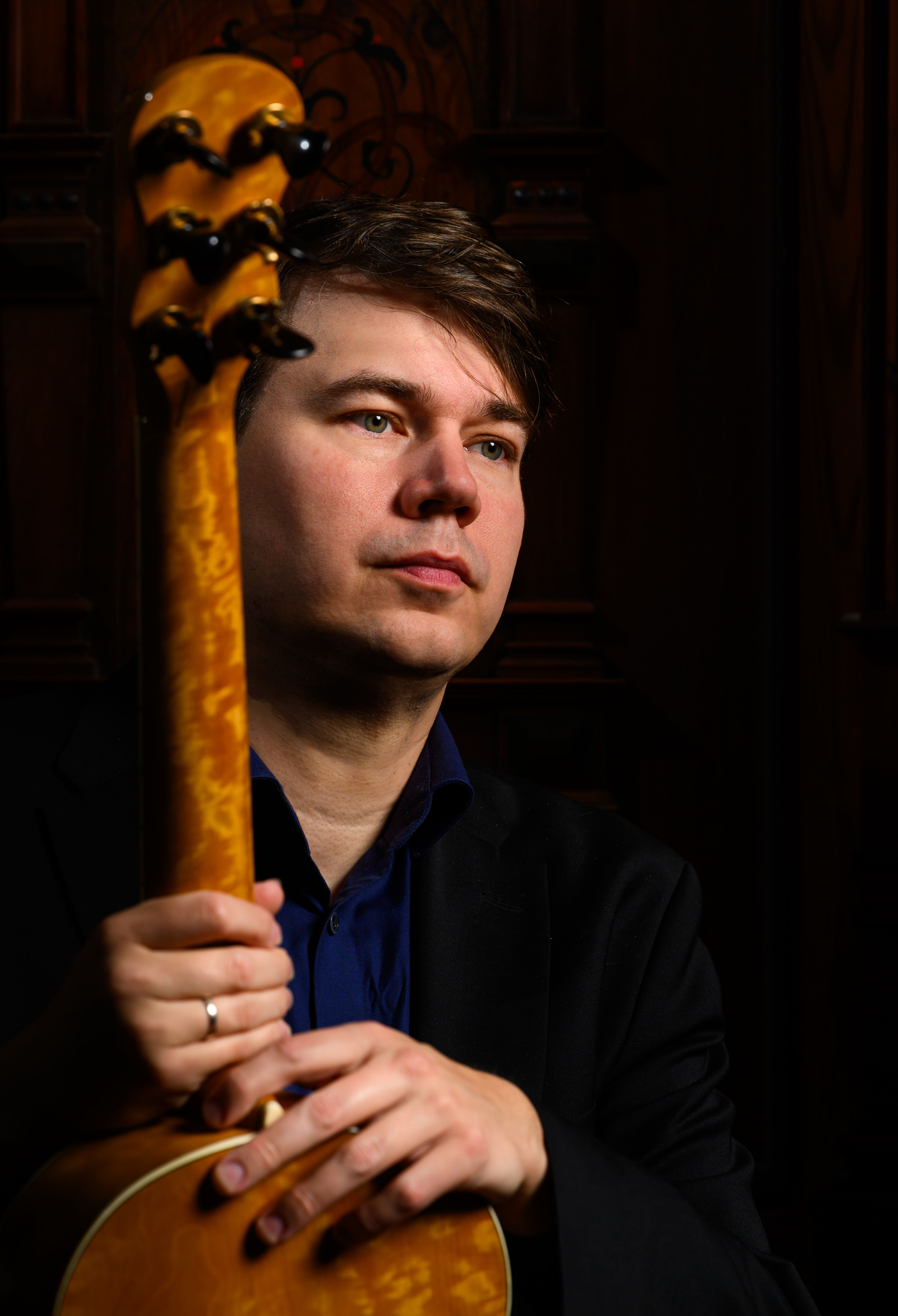
Patrik Kleemola is one of the foremost Finnish classical guitarists. After winning the II Guitaristival “Takemitsu” International Guitar Competition in Finland and gaining prizes in other competitions such as Gargnano’s International Guitar Competition, his international concert career has taken him to London, Buenos Aires, Rome, Dublin, Milan, Athens, Turin, Florence, Tallinn, Helsinki and other cities in South America and Europe. Kleemola regularly plays chamber music with various international ensembles and has performed as a soloist with many symphony orchestras such as Orquesta Sinfonica de la Juventud Venezuelana El Sistema, Orchestra I Pomeriggi Musicali, San Remo Symphony Orchestra, Turku Philharmonic Orchestra, Lecce Symphony Orchestra and Uusinta Ensemble among others. Kleemola’s intense collaboration with composers has led to over 60 premieres of contemporary works for guitar including concertos, solo works, chamber music and pedagogic literature. Kleemola has made CD recordings of the works written for him, and he has appeared on many other releases. In recent years Kleemola has focused his attention to early 19th-century guitar repertoire and especially Fernando Sor, whose music he performs on an original René Lacote (1839). Kleemola’s research on Sor has led to many new findings on Sor’s life and collaboration with the foremost scholars on the subject. In addition to his performing career, Kleemola is Lecturer in Guitar at Turku Conservatory in Finland and the artistic director of Turku Guitar Festival. Kleemola studied the guitar in Turku Music Academy with Timo Korhonen and Ismo Eskelinen, with Oscar Ghiglia at the Accademia Musicale Chigiana in Siena gaining three times Diploma di Merito, and finished his studies and soloist diploma at Monopoli Conservatory with Massimo Felici.
Romaric Martin
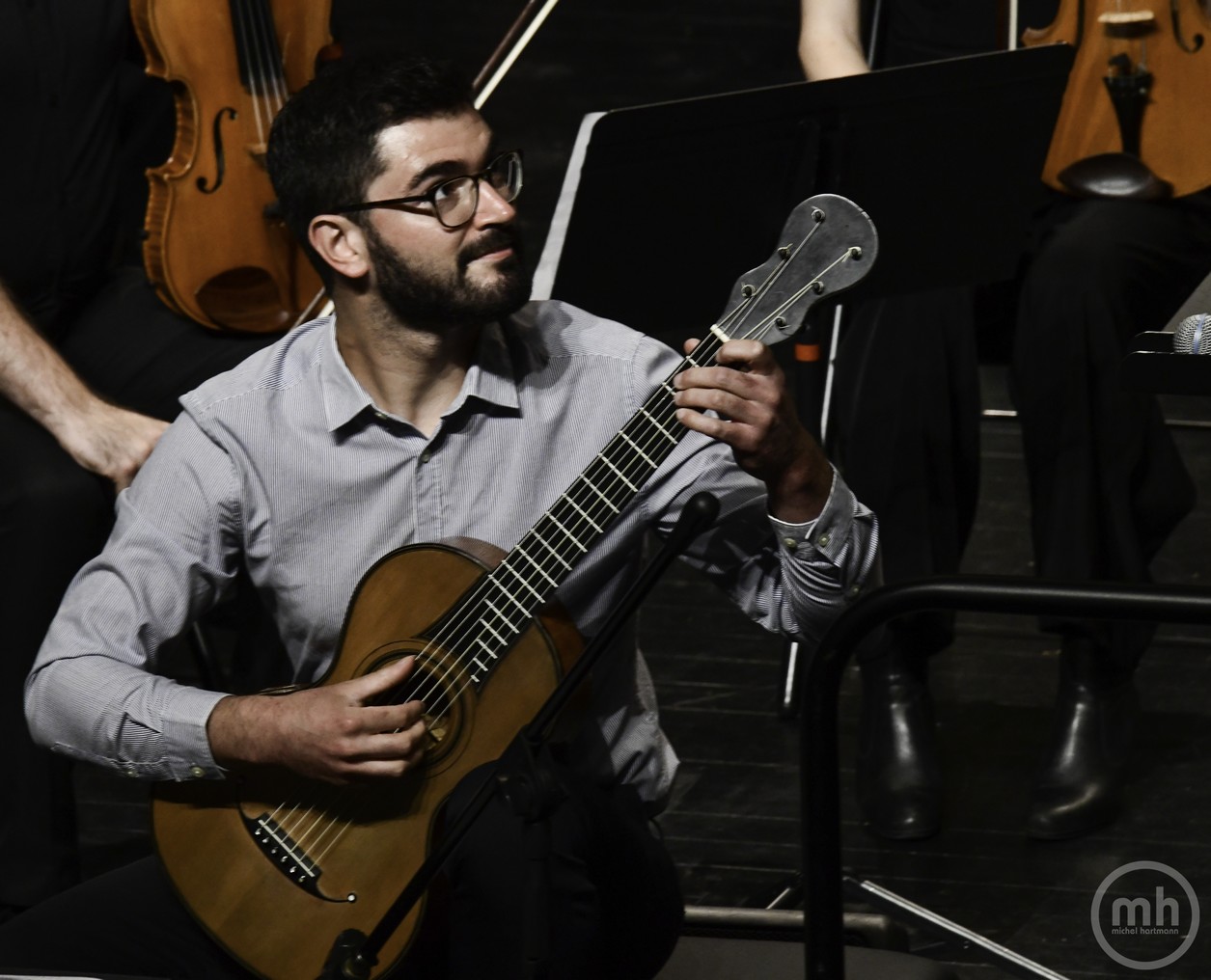
Romaric Martin (b. 1991) is a French guitarist and guitar teacher. After obtaining in 2011a diploma in classical guitar and chamber music (2011) at Bordeaux with Olivier Chassain, Romaric took a bachelor’s degree at Le pont supérieur (Rennes) with Pablo Marquez and Hervé Merlin. Since 2009, he has worked with Bruno Marlat on romantic guitar repertoire. In 2017, he completed a master’s degree in performance practice (romantic and baroque guitar) and musicology at the University of Poitiers with a thesis in titled (in translation) Arrangements for guitar with special reference to François Doisy. The same year he obtained the State Diploma of guitar teacher in Poitiers. He currently teaches the classical guitar at the Conservatory of music in Vierzon, and gives master-classes in France, Belgium and Spain. Romaric has collaborated with many musicians and chambers ensembles. Since 2012, he has played in the Duo Tarantelle with the Belgian guitarist Stijn Konings. The duo plays historical guitars by the Roudhloffs. He also currently performs with the baroque ensemble Les Ombres whose programme entitled Fandango! resulted in the recording of a CD (2020) entitled Une nuit à Madrid (Mirare).
Johan Löfving
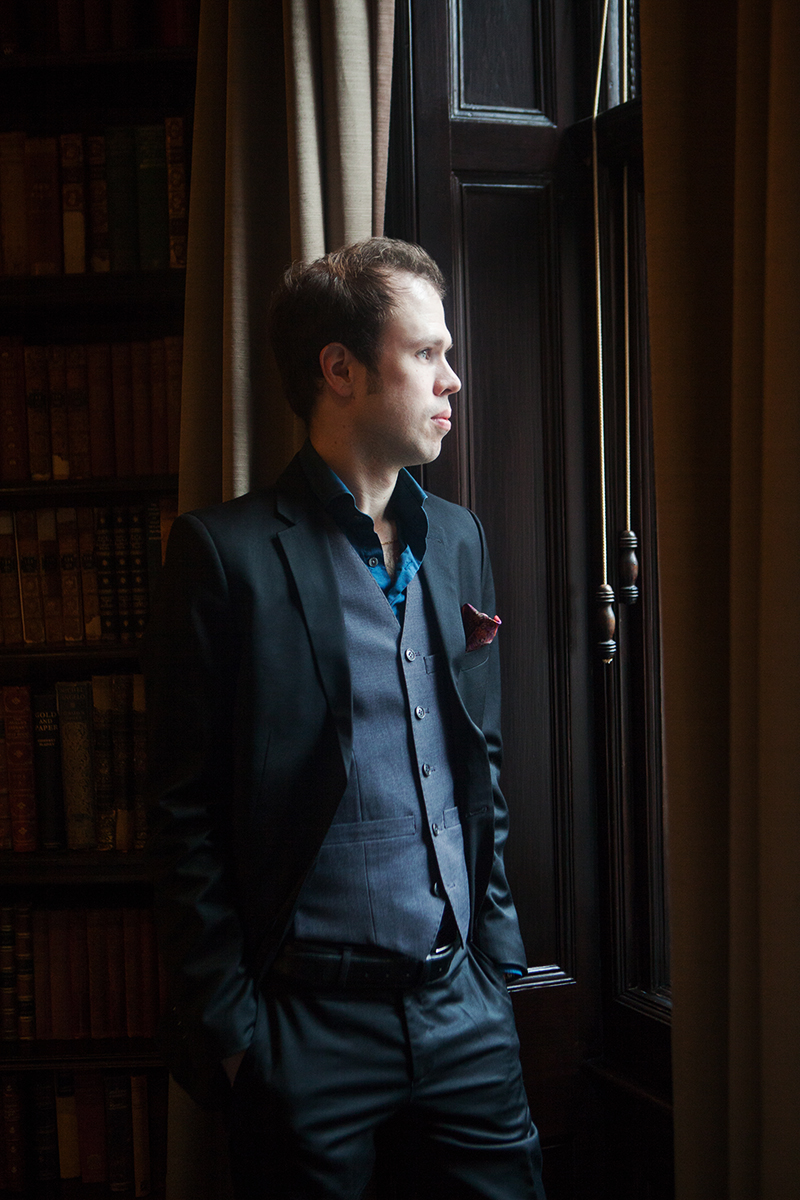
Hailed for his ‘magical playing’ (Classical Guitar Magazine), Swedish-born guitarist and theorbo-player Johan Löfving has established himself as one of the outstanding artists of his generation. His expressive playing style, combined with thorough research, has made for uniquely personal interpretations of historical repertoires. Johan’s solo recitals have taken him to some of the finest halls in Britain such as Kings Place and Sage Gateshead, followed by celebrated chamber music performances at major festivals and venues including Wigmore Hall, London Festival of Baroque Music, and the early music festivals in Brighton and York. Apart from his long-term work with Flauguissimo and flautist Yu-Wei Hu, he has worked with musicians such as baritone and director Thomas Guthrie, tenor Rob Murray and pianist David Owen Norris, who invited him to take part in the ‘Playlist Series’ on BBC Radio 4. Other radio appearances include Swedish Radio P2 and BBC Radio 3 where he was invited as ‘Home Session’ artist during the national lockdown, presenting the early romantic guitar to a wider audience. His solo debut album ‘Fandango!’ was released in 2020 by Resonus Classics to great critical acclaim and was recorded on an original 19th century guitar. Johan is also a keen teacher and researcher. As a PhD candidate at the University of York, he is currently mapping out the expressive resources of early romantic guitar playing under the supervision of Dr. Emily Worthington. Besides teaching and performing, Johan is the co-founder and artistic director of Wermland Early Music Festival, Sweden.
 The Cambridge Consortium for Guitar Research